

MediTrust Health Attends HSBC China Investors Summit to Discuss Innovative Healthcare Solutions Amid Aging Population
2024.11.18
Recently, the 2024 HSBC China Investors Summit was successfully held in Shanghai. Qi Lei, Chief Financial Officer of MediTrust Health, was invited to attend and participated in a roundtable discussion on the theme “Leading the Future of Disease Treatment and Prevention”. During the discussion, Qi Lei explored how innovative healthcare solutions can improve the accessibility and affordability of healthcare services in the context of an aging population.
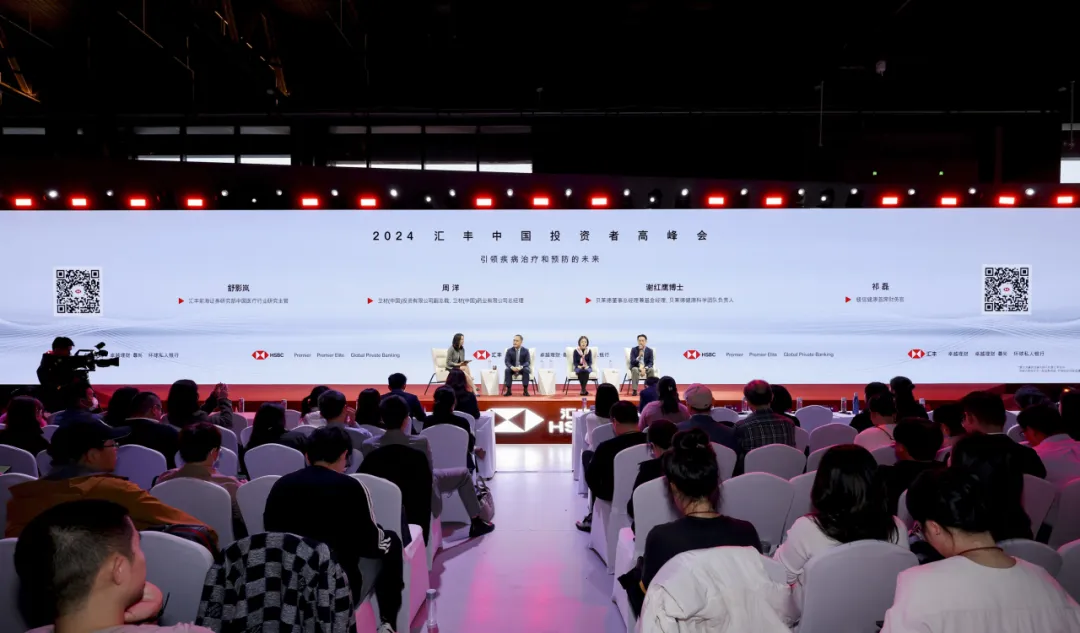
Qi Lei pointed out that basic medical insurance provides effective “broad coverage and basic protection” for the public. However, with the population aging intensifies, there is increased pressure on medical insurance funds. Many innovative pharmaceuticals, medical devices, and advanced treatments have high overall research and development costs, as well as high treatment expenses, making it literally impossible for basic medical insurance to cover more patients. In response to these challenges, MediTrust Health is committed to providing industry-level multi-tier payment solutions that address the problems existing in the use and payment of innovative pharmaceuticals and medical devices, bringing high-quality drugs, devices, and treatments closer to users.
Take the “million-dollar anti-cancer drug” CAR-T cell therapy for example, it’s an innovative cancer treatment that has demonstrated remarkable therapeutic effects globally, but remains out of reach for many patients due to its high cost. Currently, the six CAR-T therapies approved in China are priced around one million yuan. Qi Lei explained that in the context where basic medical insurance cannot cover innovative pharmaceuticals and medical devices, MediTrust Health has been actively collaborating with pharmaceutical companies to explore innovative payment models. To date, MediTrust Health has assisted in including various innovative treatments, including CAR-T therapy and in-vivo radiation therapy, into several commercial insurance products and city supplementary insurance plans led by local governments, significantly reducing the economic burden on patients.
At the recently concluded 7th CIIE, MediTrust Health launched a new platform solution—the “Diversified Payment Solutions Section”—on the Care2Pay. This platform, based on MediTrust Health’s innovations in multi-tier payment models, provides a one-stop, comprehensive solution for multi-layer payment options, covering the entire process of finding, using and payment of medicaiton. The platform also offers one-stop diversified payment solutions, including integrated city supplementary insurance, commercial health insurance, payment plans for out-of-pocket patients, charitable drug donations, and financial installment plans, all designed to offer full-spectrum support for medication access. The platform will initially feature over 200 new and specialty drugs, covering major diseases such as cancer, rare diseases, and Alzheimer’s disease. Additionally, the platform offers a one-click claims service, making the process of insurance claims unprecedentedly convenient for insurance beneficiaries. The availability of direct-billing feature ensures that patients no longer need to pay the full cost upfront. Instead, they can pick up their medication by paying only the remaining balance after insurance reimbursement. This ensures that patients can focus more on treatment and recovery rather than economic burden, which can provide a more affordable, faster, and healthier medical service experience.
According to Qi Lei, MediTrust Health will continue to step up its efforts in exploration and innovation in the field of multi-tier payment solutions through technological and service innovations, providing high-quality healthcare services to more patients. According to data, MediTrust Health has saved nearly 4.5 billion yuan in medical expenses for its users and has served 180 million commercial health insurance users and 170 million users of city supplementary insurance.


Marketing Activities
marketing@meditrusthealth.com
Address
12/F, Building A, Fenglin Plaza 380 Fenglin Road, Xuhui District, Shanghai
Address
12/F, Building A, Fenglin Plaza 380 Fenglin Road, Xuhui District, Shanghai
 电子营业执照
 沪公网安备31010402003664号@Copyright©MediTrust Health 2019
互联网药品信息服务资格证(沪)- 经营性-2022-0175
沪ICP备17043297号-1
镁信健康官方网站 | 上海镁信健康科技集团股份有限公司