

Highlights from the MediTrust Health Accelerate 2025 | Industry Leaders Gather to Discuss the Future of Payment Innovation and Ecosystem Collaboration
2025.05.21
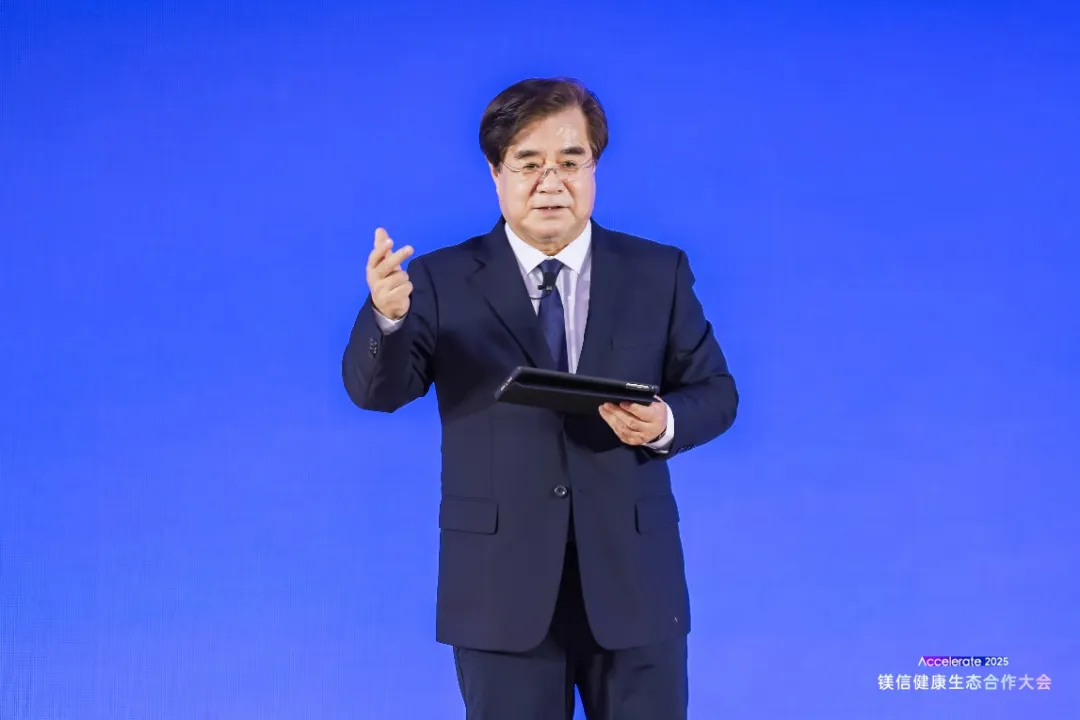
During the “Payment Innovation and Ecosystem Collaboration Forum” at the 2025 MediTrust Health Ecosystem Partnership Conference, Zhou Yanli, former Vice Chairman of the China Insurance Regulatory Commission, delivered a keynote speech titled “AI+ Commercial Insurance Action Plan to Empower the High-quality Development of the Pharmaceutical, Healthcare, and Insurance Sectors”.
Zhou emphasized that the coming five years, which coincide with China’s 15th Five-Year Plan, represent a pivotal period for achieving full modernization. Key goals include marked improvements in the equalization of basic public services and the enhancement of a multi-tiered social security system. Zhou called on the pharmaceutical, healthcare, and insurance sectors to embrace the people-first approach, fully leverage the role of commercial health insurance, and actively promote product and service innovation. He advocated for coordinated development between commercial health insurance and the healthcare and pharmaceutical systems, to jointly serve the high-quality advancement of China’s multi-layered healthcare security framework.
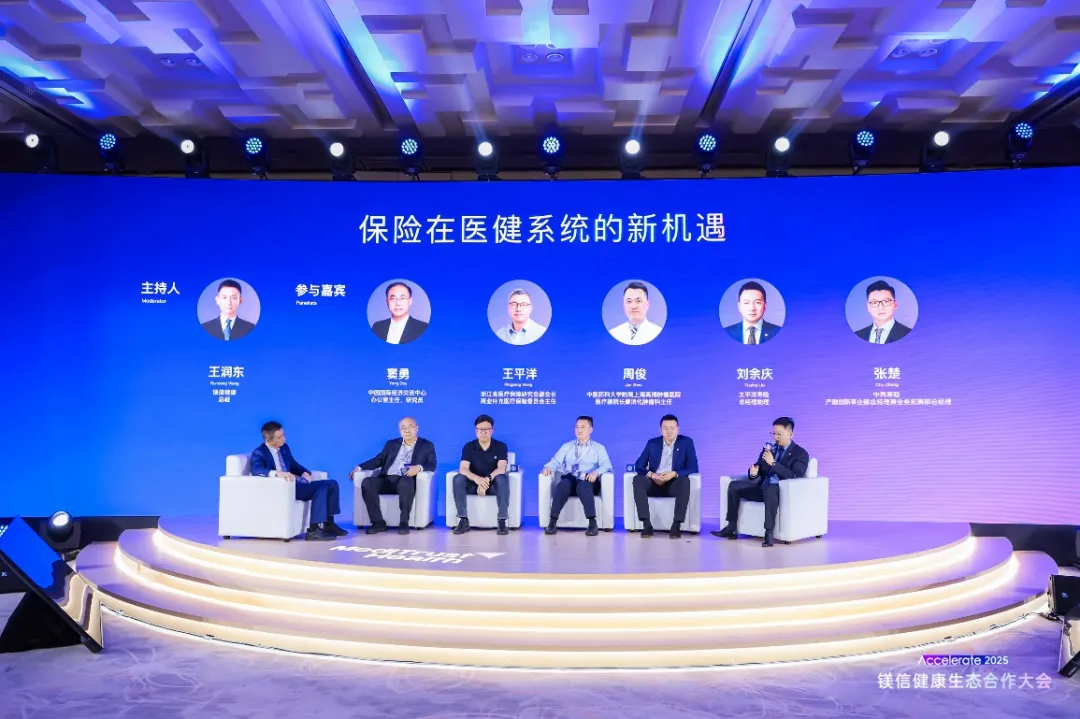
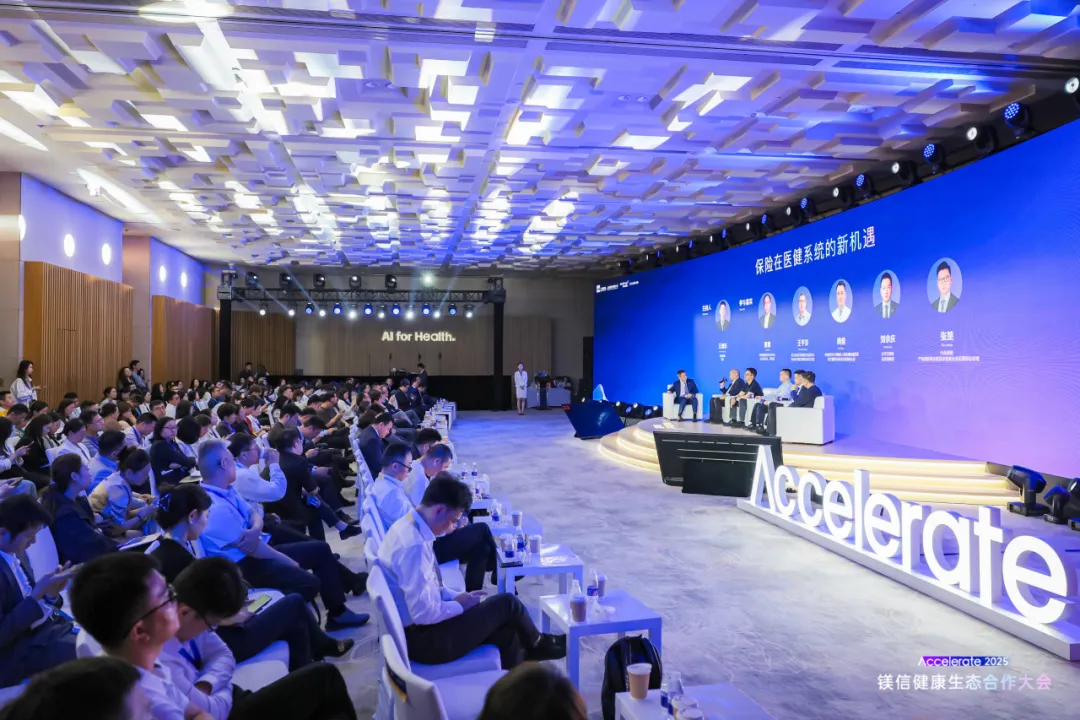
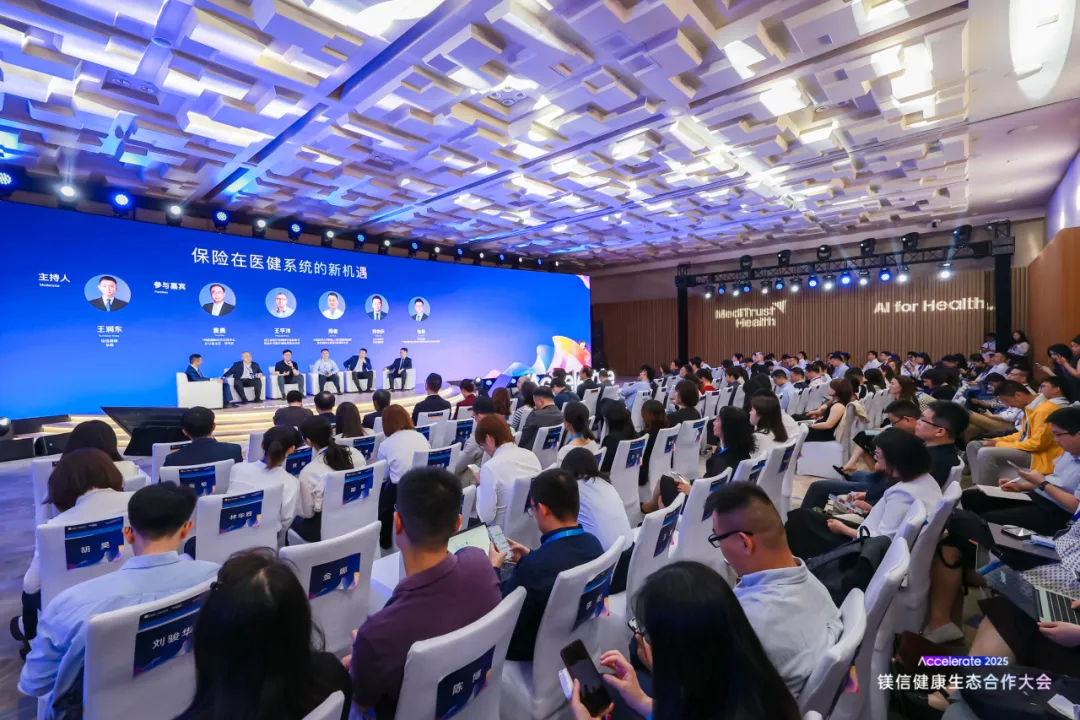
Forum 1: New Opportunities for Insurance in the Healthcare System
The subsequent first roundtable session, titled “New Opportunities for Insurance in the Healthcare System”, was chaired by Wang Rundong, President of MediTrust Health. The discussion centered on key challenges in the collaboration between commercial health insurance and the healthcare-pharmaceutical industries, practical models of cross-sector innovation, and ecosystem-building strategies for integrated development of medical, pharmaceutical, and insurance services.
Dou Yong, Director of the General Office and Researcher at the China Center for International Economic Exchanges, addressed major roadblocks to integration: “The most critical challenge is how to provide accessible and effective healthcare products and services to the public, which involves coordination across multiple departments and industries. Additionally, commercial insurance products still have room for improvement. Another major barrier is data fragmentation—actuarial design relies on data, and without access to robust data, it's nearly impossible to launch accurate, customized insurance products.”
Wang Pingyang, Vice President of the Zhejiang Health Insurance Research Association, added: “Commercial health insurance currently faces several bottlenecks in collaborating with the healthcare and pharmaceutical sectors—including limited scale and payment volume, shallow integration, and lack of interoperability across information systems. These issues hinder the efficient allocation of commercial health insurance funds and slow down the inclusion of innovative drugs and medical devices in insurance coverage.”
Dr. Zhou Jun, Deputy Medical Director and Head of Gastrointestinal Oncology from Shanghai GoBroad Cancer Hospital affiliated to China Pharmaceutical University, shared the perspective from the healthcare provider side: “At present, the payment capacity of commercial insurance provides strong support for the growing demand for multi-tiered healthcare services—particularly in premium private hospitals, and in international and VIP services of Grade A tertiary hospitals. In tandem with social medical insurance, commercial health insurance plays a vital role in advancing the ‘Healthy China’ initiative and has significantly contributed to the R&D efforts of pharmaceutical and medical device enterprises in China. So long as medical institutions, commercial insurers, and pharma/medtech companies collaborate to jointly design diverse commercial insurance products—leveraging each other’s strengths, fostering mutual benefit—we can expand access to quality medical care and elevate the health of the Chinese people. This will be our collective contribution to realizing the vision of Healthy China 2030.”
Liu Yuqing, Assistant General Manager of CPIC Life, added from a product development standpoint: “The healthcare-pharma-insurance integration requires participation from talent with diverse backgrounds—not just traditional mathematics or statistics majors, but also those with medical, health economics, and health statistics training. When such expertise is integrated into health insurance product development, it allows for more seamless alignment between the product, the customer journey, and the healthcare and pharmaceutical ecosystems.”
Zhang Chu, General Manager of the Financial Innovation and Business Development Division at China Re, further highlighted pain points in commercial insurance: “Currently, commercial health insurance largely focuses on the sales process and post-diagnosis financial compensation, remaining disconnected from the core healthcare and pharmaceutical systems. This limits its ability to participate in medical risk control, reducing it to a mere reimbursement tool. While insurers are experimenting with product-service bundles, these attempts are either limited to marketing gimmicks or fail to connect meaningfully with patient engagement and treatment behavior. As a result, customer perception remains low, and actual usage rates are extremely limited.”
Forum II: Capturing Innovation Opportunities in China’s Pharmaceutical Market Amid Uncertainty
The second roundtable discussion, themed “Capturing Innovation Opportunities in China’s Pharmaceutical Market Amid Uncertainty”, was moderated by Huang Peijie, Senior Advisor at Boston Consulting Group. The session focused on core trends shaping the pharmaceutical industry, examining growth pathways under shifting policy and capital landscapes, and exploring strategic similarities and differences between domestic and multinational enterprises—particularly seeking for “win-win situation” in areas such as translational innovation, reforms in healthcare payment models, and AI-driven R&D and marketing.
Peyronnet Arnaud, Greater China President of Sanofi, remarked: “Pharmaceutical innovation occurs across three dimensions: fundamental innovation, applied innovation, and commercial innovation. In the fields of commercial and applied innovation, China has already taken the global lead. While there remains room to catch up in foundational innovation, I am optimistic about the road ahead.”
Liu Min, Chairman and CEO of JW Therapeutics, further noted that overcoming payment barriers is a shared challenge among CAR-T therapy companies. “In recent years, JW Therapeutics has been actively exploring sustainable, risk-sharing mechanisms by integrating with government-subsidized health insurance, commercial health insurance, and outcome-based insurance products. The value of diversified payment lies not only in improving patient access, but also in enabling pharmaceutical companies to secure fair returns on R&D investments, ultimately fostering a virtuous cycle of industry growth.” he said.
For innovative pharmaceutical companies, commercial insurance has become one of the primary payment sources. Zhao Hong, President and CEO of SciClone Pharmaceuticals, stated: “All innovation is for the benefit of patients. Basic medical insurance can only support essential healthcare coverage, and that’s where we see the value of commercial insurance. Over the past two years, with the support of MediTrust Health and other platforms, we’ve been part of the government-subsidized health insurance in over 80 cities nationwide. We firmly believe that innovative pharmaceutical companies need diversified, innovative payment solutions. Only in this way can the entire ecosystem form a closed loop.”
The success of the Ecosystem Partnership Conference not only brought together industry wisdom but also provided new ideas and directions for the integrated development of healthcare, pharmaceuticals, and insurance. Moreover, through the innovative upgrades to the Care2Pay platform, the conference presented practical and feasible solutions to address patient payment challenges and improve the accessibility of innovative pharmaceuticals and medical devices.
Looking ahead, as population aging accelerates and medical demand continues to rise, all industry stakeholders must adhere to the principles of long-termism and innovation while working collaboratively. We believe that when payment innovation truly addresses patient needs, and ecosystem collaboration focuses on value creation, the Chinese healthcare industry will make strides toward high-quality development. MediTrust Health will continue to refine its user-centered service ecosystem, accelerating the availability of high-quality innovative pharmaceuticals and healthcare services, bringing them into households nationwide, and delivering better health and well-being outcomes for billions of people.


Marketing Activities
marketing@meditrusthealth.com
Address
12/F, Building A, Fenglin Plaza 380 Fenglin Road, Xuhui District, Shanghai
Address
12/F, Building A, Fenglin Plaza 380 Fenglin Road, Xuhui District, Shanghai
 电子营业执照
 沪公网安备31010402003664号@Copyright©MediTrust Health 2019
互联网药品信息服务资格证(沪)- 经营性-2022-0175
沪ICP备17043297号-1
镁信健康官方网站 | 上海镁信健康科技集团股份有限公司